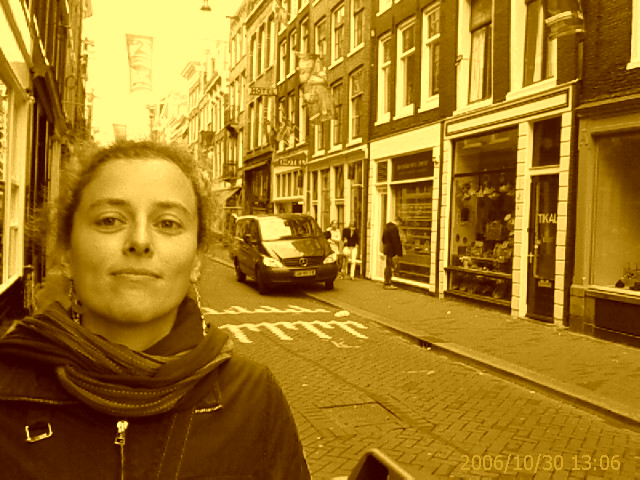
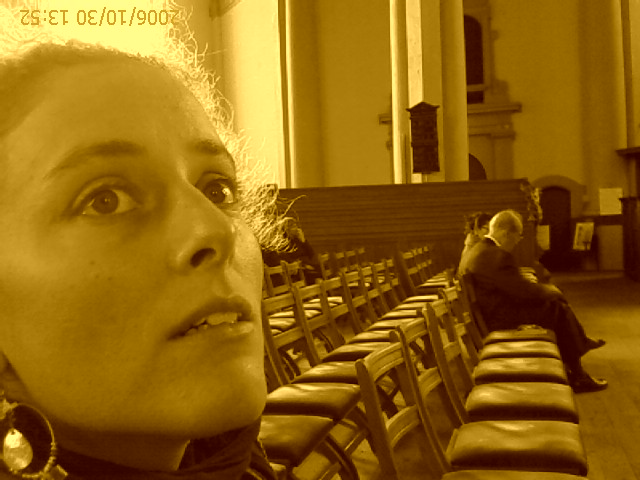
Em Amsterdão, 'tá-se muito bem mesmo!! Ó pa mim caminhando, contemplativa, com ataque de loucura (apenas momentânea!!) e feliz!!
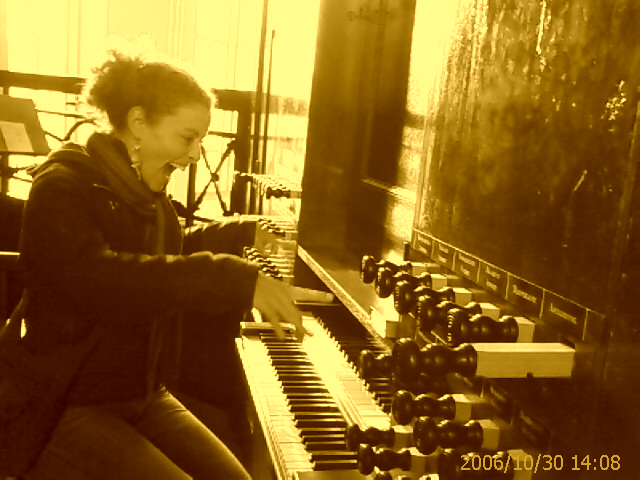

Engordei!!?! Ronha a mais!!!!


When contemplating whether to do something or not, a plucky voice in our heads may say, "You never know until you try." This is time-honored wisdom that encourages us to be game rather than to hold back. It reminds us that it is only through experience that we learn about this world and ourselves. Even if we regret the outcome, we have learned something, and the newfound knowledge is almost always worth it.
This wisdom can be applied to situations both large and small. From crossing the Atlantic on a boat to trying Ethiopian food, there's only one way to find out what it's like. We have all had experiences where we tried something we didn't think we'd like and fell in love. We may have found ourselves stuck with nothing to read but a "boring" book, only to kick-start a lifelong passion for Victorian literature. We may have decided that sailing was not for us until we fell in love with someone with a boat. On the other hand, we may try tofu only to learn that it is truly not for us. In this case, we gain greater self-knowledge from the experience. And yet, we might still remain open to trying it prepared in a different way. The right marinade might make you a convert-you'll never know if you don't try it.
It is often said that at the end of our lives we are more likely to regret the things we did not do than the things we did. As an exercise to test your own willingness to discover through doing, try making a list of things you regret not having done. You may begin to notice patterns such as a failure to say what you really think at key moments or closed-mindedness to certain types of activities. Just being aware of the opportunities you missed might encourage you not to miss them again. There's only one way to find out.
Anything worth doing will always have some fear attached to it. For example, having a baby, getting married, changing careers-all of these life changes can bring up deep fears. It helps to remember that this type of fear is good. It is your way of questioning whether you really want the new life these changes will bring. It is also a potent reminder that releasing and grieving the past is a necessary part of moving into the new.
Fear has a way of throwing us off balance, making us feel uncertain and insecure, but it is not meant to discourage us. Its purpose is to notify us that we are at the edge of our comfort zone, poised in between the old life and a new one. Whenever we face our fear, we overcome an inner obstacle and move into new and life-enhancing territory, both inside and out. The more we learn to respect and even welcome fear, the more we will be able to hear its wisdom, wisdom that will let us know that the time has come to move forward, or not. While comfort with fear is a contradiction in terms, we can learn to honor our fear, recognizing its arrival, listening to its intelligence, and respecting it as a harbinger of transformation. Indeed, it informs us that the change we are contemplating is significant, enabling us to approach it with the proper reverence.
You might wish to converse with your fear, plumbing its depths for a greater understanding of the change you are making. You could do this by sitting quietly in meditation and listening or by journaling. Writing down whatever comes up-your worries, your sadness, your excitement, your hopes-is a great way to learn about yourself through the vehicle of fear and to remember that fear almost always comes alongside anything worth doing in your life.
Um muito bom dia a todos!!!


Desejo (...)que cada vez mais pessoas me tirem a máscara, que cada vez mais seja eu, que toda a sombra que me envolve levante voo e não pare até que o horizonte a engula, que fique só o teu negro que me dá cor. (...) Que não me arrependa do que não fiz e que viva cada momento como o primeiro.(fonte)
São imensas as pessoas que viram a página. Por diversas razões, mas o princípio é o mesmo: força de viver!!!!


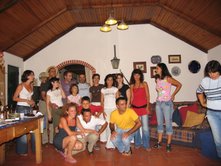 (esta é apenas uma pequena amostra dos festeiros)




We all want to be the kind of people who are happy for others when they experience success or a cause for celebration in their lives, but it isn't always easy. Sometimes powerful, dark feelings come up at times when decorum dictates that we should be feeling the opposite. Instead of reaching out and celebrating for our loved one, we may feel the rising up of our own pain. This pain may arise because we feel jealous of our friend for having something we don't have. It may arise because our friend's success will lead to us losing them in some way. And it may arise for reasons we don't yet understand. The important thing is not to brush it under the rug, but to take it seriously and look at it; suppressing it will only make it worse. At the same time, we need to be sure to find a way to congratulate our friends and celebrate their successes as if they were our own.
The struggle with being happy for others presents itself early in life. If a child wants a toy and another child has it, the child will try to get it or will break down in tears. Those primal feelings are still present in most of us, and we have to acknowledge them when they arise. At the same time, it is when we care enough for someone to let go of what we want for ourselves that we grow as people. It can be a difficult dance to find ourselves suspended between wanting the toy and throwing a party for our friend who got the toy. Yet, it is in throwing the party that we share in the joy-and, to some extent, the toy-rather than cutting ourselves out of it.
Extending ourselves to celebrate the happiness of others requires a generosity of spirit that we sometimes find only in the process of doing it. So when your best friend moves to Spain with the person you had a crush on, tend to your broken heart but throw them a going away party too.(Fonte)










There are many variations on the story of stone soup, but they all involve a traveler coming into a town beset by famine. The inhabitants try to discourage the traveler from staying, fearing he wants them to give him food. They tell him in no uncertain terms that there's no food anywhere to be found. The traveler explains that he doesn't need any food and that, in fact, he was planning to make a soup to share with all of them. The villagers watch suspiciously as he builds a fire and fills a cauldron with water. With great ceremony, he pulls a stone from a bag, dropping the stone into the pot of water. He sniffs the brew extravagantly and exclaims how delicious stone soup is. As the villagers begin to show interest, he mentions how good the soup would be with just a little cabbage in it. A villager brings out a cabbage to share. This episode repeats itself until the soup has cabbage, carrots, onions, and beets-indeed, a substantial soup that feeds everyone in the village.
This story addresses the human tendency to hoard in times of deprivation. When resources are scarce, we pull back and put all of our energy into self-preservation. We isolate ourselves and shut out others. As the story of stone soup reveals, in doing so, we often deprive ourselves and everyone else of a feast. This metaphor plays out beyond the realm of food. We hoard ideas, love, and energy, thinking we will be richer if we keep to them to ourselves, when in truth we make the world, and ourselves, poorer whenever we greedily stockpile our reserves. The traveler was able to see that the villagers were holding back, and he had the genius to draw them out and inspire them to give, thus creating a spread that none of them could have created alone.
Are you like one of the villagers, holding back? If you come forward and share your gifts, you will inspire others to do the same. The reward is a banquet that can nourish many.

Love, love, love, love, love, love, love, love, love.
There's nothing you can do that can't be done.
Nothing you can sing that can't be sung.
Nothing you can say but you can learn how to play the game
It's easy.
There's nothing you can make that can't be made.
No one you can save that can't be saved.
Nothing you can do but you can learn how to be in time
It's easy.
All you need is love, all you need is love,
All you need is love, love, love is all you need.
Love, love, love, love, love, love, love, love, love.
All you need is love, all you need is love,
All you need is love, love, love is all you need.
There's nothing you can know that isn't known.
Nothing you can see that isn't shown.
Nowhere you can be that isn't where you're meant to be.
It's easy.
All you need is love, all you need is love,
All you need is love, love, love is all you need.
All you need is love (all together now)
All you need is love (everybody)
All you need is love, love, love is all you need.

| Primeira instituição virada para os índigos surgiu muito recentemente em Portugal Casa índigo Em Portugal, a questão das crianças índigo ainda é pouco conhecida, mas existe já a Casa índigo, em Lisboa, destinada ao esclarecimento, estudo e desenvolvimento de actividades ligadas às crianças e jovens índigo. Fundada em Janeiro de 2005, por Teresa Guerra, autora do livro “Crianças índigo”, e por Alain Aubry, de origem chilena mas à muito radicado em Portugal, na Casa índigo também se desenvolvem ateliers de arte, teatro, pintura, assim como aulas de bio-dança e não menos importante, sessões de apoio terapêutico. Até hoje, esta instituição sem fins lucrativos não recebeu «qualquer tipo de apoio oficial dos órgãos competentes, daí ainda não termos espaços adequados às crianças e para todas as actividades que necessitamos para desenvolver o projecto», adianta Teresa Guerra. Para contrariar esta tendência, os fundadores da Casa índigo estão já a estudar a «elaboração de um projecto de modo a que venha a ser financiado, para assim poder expandir esta instituição e dar todas as condições às crianças que procurem os nossos serviços», acrescenta Alain Aubry. P.F. |
 Não é aquela mas é uma. Para além da foto, também encontrei o blog da libélula e encontrei um artigo «A hora certa de casar», que dedico aos meus amigos Rita e Rodrigo que em breve darão o nó.
Numa marcha de cerca de três quilómetros, os trabalhadores exibem duas faixas, uma vermelha onde se lê «trabalhadores da Opel em defesa dos postos de trabalho» e outra branca a afirmar «não à deslocalização da produção da Opel».
Os trabalhadores estão a ocupar uma das faixas de rodagem da estrada nacional 3, o que está a condicionar o trânsito no sentido Lisboa - Azambuja.
A marcha, acompanhada pela Brigada de Trânsito da GNR, está a decorrer ordeiramente, ao som das buzinas dos camiões que circulam na outra faixa de rodagem e que manifestam o apoio aos trabalhadores.
Os cerca de 1.200 trabalhadores da fábrica da Azambuja iniciaram às 00:00 de hoje uma greve de 24 horas, tendo começado a concentrar-se na empresa às 08:30 de hoje.
Os trabalhadores seguem em direcção à Câmara Municipal da Azambuja, onde se vão encontrar simbolicamente com o presidente da autarquia, Joaquim Ramos.
Diário Digital / Lusa


